An accident accidentally turned me into a pilot.
Last week, “Hoover” of Pilot Debrief on YouTube covered the December 1st, 1993 crash of Northwest Airlink flight 5719 in Hibbing, Minnesota. Broadly categorized as a controlled flight into terrain accident, the pilots lost track of their altitude during an intentional rapid descent in low visibility, freezing rain, and snow. Communication broke down, the first officer missed altitude callouts, and the result was the deadliest civil aviation accident in Minnesota history. There were eighteen aboard and the crash was not survivable.
I’m not going to analyze the accident, it has been sufficiently covered elsewhere. Rather, I’m going to try to wrap words around how it redirected my life in an impossible way through random chance.
Dude on a hike
I was growing up in the Twin Cities when the accident occurred. The flight originated in the Twin Cities, the crew was based in the Twin Cities, and the first officer grew up a decade ahead in the same suburb as me. I probably heard about it back then, but I don’t recall. I had no interest in airplanes when I was young. Had I heard about it, it wouldn’t have stuck with me.
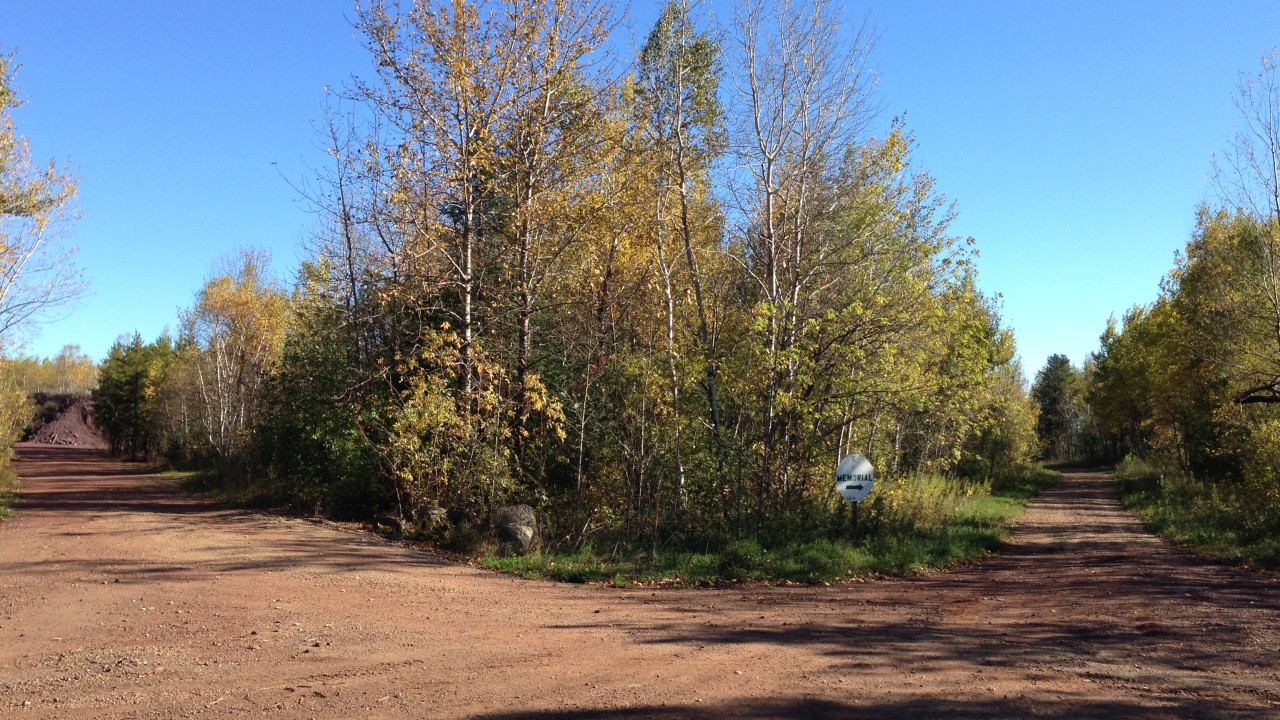
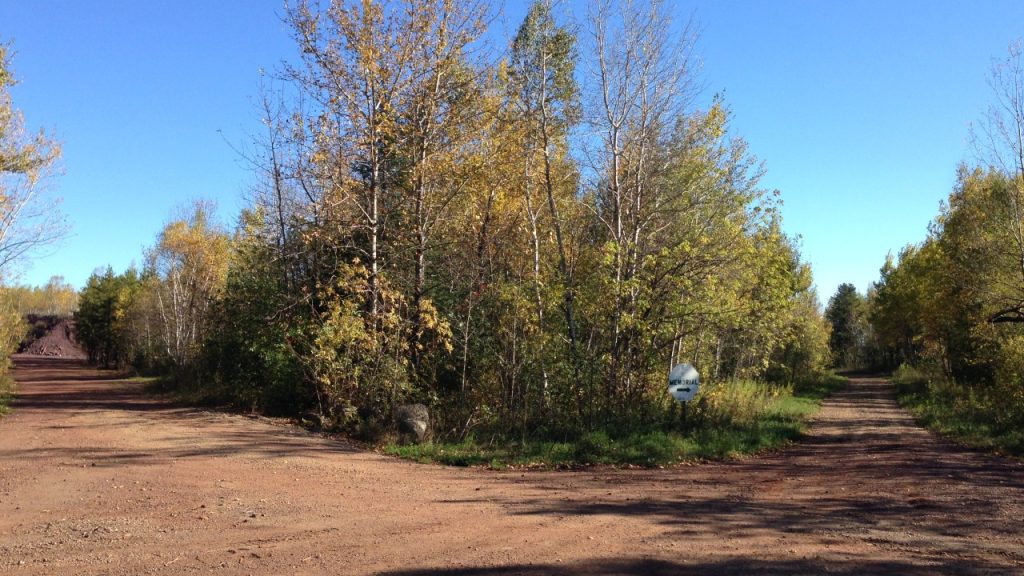
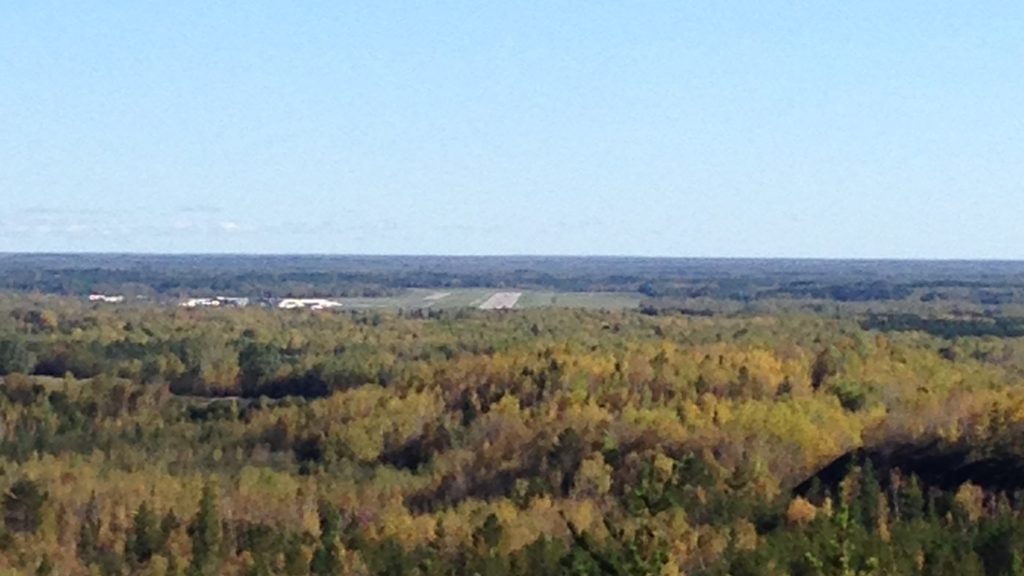
I became truly aware of it a decade later, as an adult, after noticing a modest sign at a fork in the trail while hiking to the top of Boy Scout Hill in Hibbing.
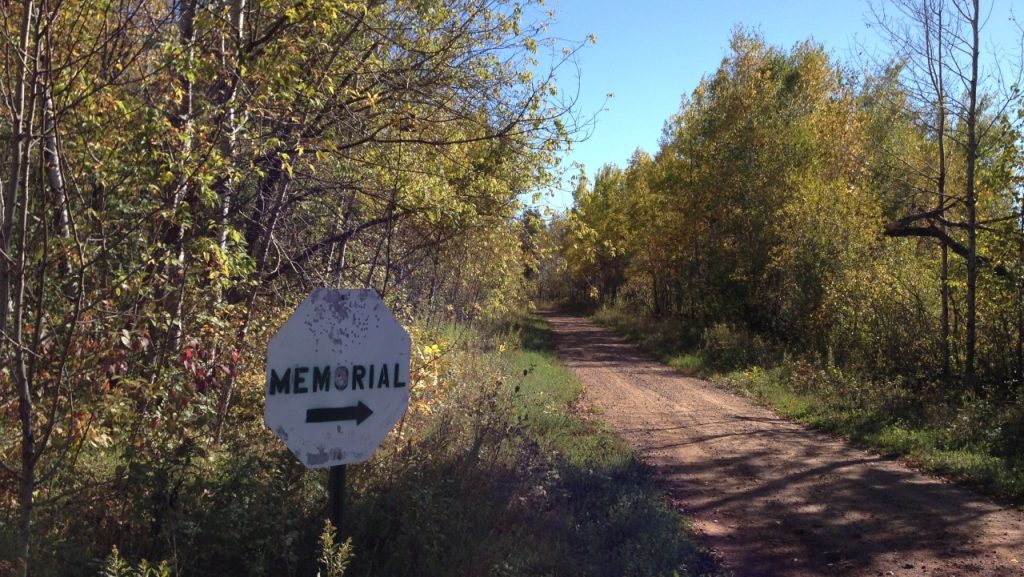
I wasn’t especially curious about that sign when I encountered it. It was taciturn, a whitewashed stop sign with MEMORIAL and an arrow hazily stenciled onto it in black spray paint. It beckoned passers-by to the right; I continued left without giving it much thought. I was there to hike to a scenic overlook during a lull between presentations at the local community college, not to pay tribute to some unspecified possibly memorable thing.
(Those were days before smartphones, cellular broadband, online aerial imagery. One could not reach into one’s pocket and pull out a bird’s eye view of one’s surroundings. MEMORIAL could’ve been twenty miles down the trail for all I knew.)
How big a deal could it be with signage like that, anyway?
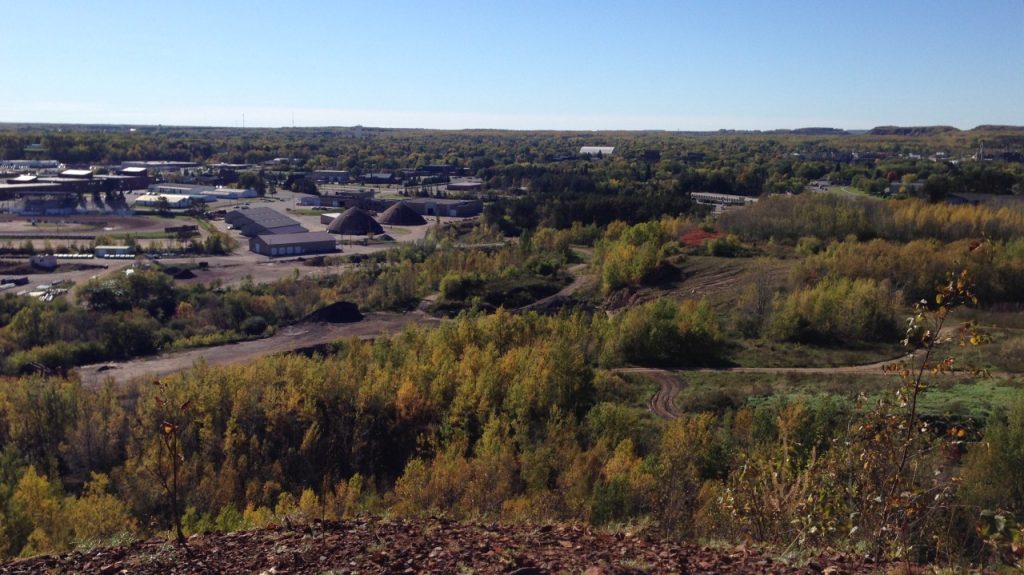
I continued on my way, eventually cresting the hill. There wasn’t much to see up there, it’s a massive pile of mine tailings from which you mostly see other slightly less massive piles of mine tailings stretching off toward infinity. But it has a nice view.
That hike was mostly unmemorable, an exercise in killing time, but I did form two enduring memories along the way. First, I remember coming across a severed deer leg on my way down the hill that I was pretty sure wasn’t there on my way up (how would I have missed that?) It was the sort of thing that grabs your mind and beats the hell out of it and doesn’t let go. I don’t want to be out here with whatever did that.
Also I remember that sign. MEMORIAL. Memorial of what?
Fruitless search
When I got back to civilization, both legs thankfully still with me, I made a halfhearted attempt to determine what was memorialized in those woods. Google searches yielded nothing at all. I assumed a mining mishap or ATV accident or something like that, something that affected a few people such that they had to consecrate the ground for their own peace, but something that was not significant to the greater outside world. Perhaps MEMORIAL was analogous to an ornamented cross at a bend in the highway.
It didn’t seem there was anything I could do to research this, but I couldn’t forget about it, either, so I started asking questions. Within a few days I got a stark clue from a friend who had grown up in Hibbing. She’d never seen the sign, wasn’t aware of any memorial, but recalled that a plane had crashed in the vicinity several years prior. Maybe the sign was related.
A plane crash? Now I’m extremely curious.
The phrase “plane crash” was the missing link. While searches for “Boy Scout Hill Hibbing memorial” yielded nothing, searches for “Boy Scout Hill Hibbing plane crash memorial” immediately uncovered the sad fate of Northwest Airlink flight 5719.

There wasn’t a lot of information online when I started digging into the accident, but the NTSB report was readily available. I read it cover to cover, mostly following its timeline of events, but was befuddled by the aviation language encoding some of it. It obscured something.
…localizer back course, it’s one three zero on the tail, three ten on the head, top of the approach is three thousand five hundred to we’re established inbound on the approach at which point we still maintain three thousand five hundred to Kinney intersection which is fourteen-point-oh DME…missed approach climb to three thousand six straight ahead direct to the Hibbing VOR and hold southeast…
What is localizer back course?
What is DME? What is VOR?
Kinney is the intersection of what and what?
What is the head? What is the tail?
I wasn’t a pilot, I had no desire to be a pilot, I wasn’t even an aviation enthusiast. But something monumental had rocked a community and I’d stumbled upon it by chance. I’d looked across it, nearly walked through it, now I needed to understand why it had occurred. I needed to know the degree of the challenge those pilots faced and why they ultimately failed to meet that challenge.
Internal conflict
Not only was I not an aviation enthusiast in those days, I was a reluctant flyer. I had recently gone through a period of frequent business travel, criss-crossing the country for a couple years, and no matter how many times I flew, I was never fully comfortable with it. I wouldn’t say that I was afraid of flying, but I was certainly uneasy with it.
I read everything I could find regarding flight 5719. The NTSB report. Archival microfiche of the Mesabi Daily News and various Twin Cities newspapers. A case study in a book called Flight Discipline. I cobbled together so much information that I eventually wrote the original Wikipedia article on the accident.
After all of that activity I still didn’t feel like I understood the technical side of what happened that night. Worse, I’d amplified what I knew was an irrational fear in me. After all, I’d indirectly witnessed that irrational fear prove all too rational in the final seconds of eighteen lives.
It occurred to me that there was one way I could solve both of these problems at the same time: I could learn to fly. I coaxed myself to the local airport and signed up for flight lessons.
Life redirected
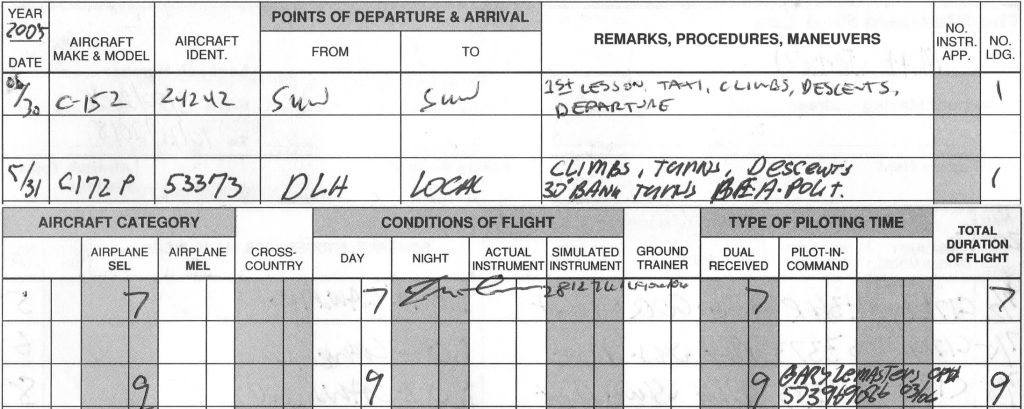
I took flight lessons. Many flight lessons.
I learned to fly. I’m not going to recount the story here, doing so would require a lot of words that wouldn’t contribute anything to this story–the story of why I learned to fly, now how. I didn’t learn to fly because I wanted to be a pilot. I learned to fly because I needed to understand a human tragedy and I needed to confront an irrational fear. Becoming a pilot, and remaining a pilot for twenty years, was merely a side effect.
I am no longer uncomfortable with airline flying. My mind and my emotions fell into agreement as the unknowns of flying became known. I still have a tinge of unease with recreational flying–the kind of flying I’ve been doing regularly for decades now–but it’s not suppressive unease. It’s sobering, clarifying, wellness-preserving unease. The kind of unease that makes you think twice before doing stupid stuff.
I still navigate on VORs when I can. I go to Eau Claire once in a while to fly a DME arc to a back course approach for lunch. It reconnects me to my improbable roots.
When I think of all of the people I’ve met and side quests I’ve stumbled into downstream of my accidental transition into a pilot, I can’t help but be grateful for that walk on that day, that sign on that path, and the mild obsession that followed me out of those woods. I don’t know where I’d be had those events never occurred. The wings of that butterfly have remixed my whole atmosphere by now.
I only wish eighteen souls had not been lost to reveal the path to me. They were gone before I knew they lived, yet I’ll remember them forever.
Appendices
- NTSB accident report
- Articles
- Remembering the lives lost aboard Flight 5719 (Mesabi Tribune)
- The Fifth Circle: The crash of Northwest Airlink flight 5719
- Include the comment chain by prive prive if you read this, as it provides counterpoint to the official narrative, which one may see as unduly harsh toward Captain Falitz.
- Videos
- Locations